
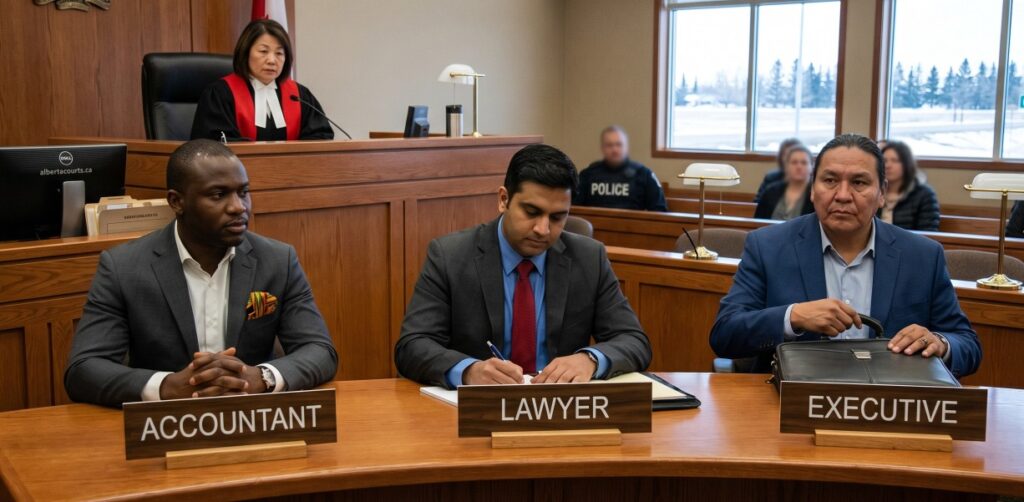
In the microcap and small-cap sectors, investors often rely on the presence of “gatekeepers”—lawyers, accountants, and former high-ranking executives—as a proxy for a company’s legitimacy. This is known as the “halo effect,” where the professional credentials or past pedigree of a board member are assumed to guarantee ethical conduct and business success.
However, an institutional-grade assessment of market misconduct reveals that these professional designations can sometimes be utilized as a “layer of disguise.” The following analysis explores the mechanisms by which professionals may facilitate manipulation and the specific questions investors should ask to see past the initials behind a name.
Mechanisms of Professional Facilitation
While many professionals provide vital services to emerging companies on stock exchange, regulatory actions highlight how these roles can be co-opted to shield misconduct from public view.
1. Trust Accounts as Transactional Conduits
The legal profession’s ability to manage large sums of capital through trust accounts is a frequent point of vulnerability.
- Minimal Inquiries: Some practitioners may allow millions of dollars to move through trust accounts without performing reasonable inquiries into the source of the funds or the identity of the ultimate beneficial owners .
- Circumventing Investigations: Funds have been moved through lawyer trust accounts even when the practitioner was aware of ongoing investigations by regulators like the SEC, effectively shielding the capital from immediate scrutiny .
2. Drafting and Disseminating Misleading Disclosure
Lawyers are often the primary authors of a company’s public voice, creating a potential gap between “drafting” and “liability.”
- Sham Customer Agreements: Professionals have been cited for drafting news releases about “game-changer” deals with international firms that, in reality, were private entities incorporated by the lawyer themselves only weeks prior .
- The Liability Gap: In some regulatory jurisdictions, a professional may be found to have drafted false or misleading material but escape liability because the company’s CEO was the one who technically “disseminated” it to the public .
3. Orchestrating Nominee and Shell Structures
Sophisticated manipulation often requires the creation of “thin air” companies to attract momentum.
- “Puppet” Officers: Practitioners may set up sham companies using figurehead or “nominee” officers to conceal the true controllers of the stock, a tactic often used to bypass exchange restrictions on insider participation in private placements .
- Fabricated Business Plans: Professionals have been found to prepare detailed, fictitious business plans for companies—such as purported fruit harvesting operations—solely to secure a public listing and facilitate a subsequent pump-and-dump .
Beyond the Initials: Why Credentials Aren’t Due Diligence
Investors often assume that a CPA, LL.B, or a history in high-level politics ensures a company is in good hands. Institutional history suggests that a “distinguished” board can sometimes be used for optics rather than oversight.
- The “Optics” Board: Companies may recruit former politicians or executives from large, blue-chip corporations to provide a veneer of credibility. However, if these individuals lack a specific, proven history of success in the microcap space, their presence may not mitigate the unique risks of small-cap volatility.
- Junior Roles and Lack of Oversight: Professionals sometimes attribute misconduct to being a “junior” in a firm with little guidance, highlighting that the prestige of a law firm or accounting firm name does not always guarantee rigorous internal oversight of every transaction.
- The “Sham” Consulting Loop: To hide money funneled to paid promoters, some practitioners utilize “sham consulting agreements” and numbered companies to disguise the source of marketing budgets, making it appear that a stock’s momentum is organic rather than manufactured.
The Professional Due Diligence Checklist
Before taking the involvement of a professional at face value, investors should apply the following critical filters:
- Check the Disciplinary Record: Beyond a LinkedIn profile, have the company’s lawyers or accountants faced sanctions from the Law Society, CPA provincial bodies, or securities commissions? Professional suspensions for failing to maintain records or professional misconduct are significant red flags .
- Verify the “Related Party” Connections: Does the company pay large consulting fees or business expenses to firms controlled by its own directors or their spouses? This can be a mechanism for wealth extraction rather than business growth .
- Evaluate Sector-Specific Experience: Does the professional have a track record of taking small companies to the “next level,” or is their history a string of defunct shells and “thinly traded” entities that eventually collapse? .
- Audit the Board’s “Active” Involvement: Is a high-profile director actually contributing to foundational decisions, or are they a “figurehead” without involvement in the company’s core strategy?.
Investor Empowerment Note: While the presence of established professionals is a standard requirement for a public company, it is a tool of credibility, not a guarantee of capital safety. In the microcap market, the most effective due diligence treats every participant’s history as a primary data point, regardless of the initials behind their name.